 MamaBee
When to Start Solids: Signs Your Baby Is Ready (and How to Begin)

The first time you offer your baby a spoonful of food, you'll either get a delighted grin or a full-body "how dare you" shudder — and honestly, both are normal. Starting solids is one of the big, messy, joyful milestones, and it comes with a hundred questions. When do we start? What foods? Purees or finger foods? Is my baby even ready?
Here's a calm, practical guide to when to start solids, the readiness signs that matter more than the calendar, safe first foods, and how to make those chaotic first meals genuinely fun.
When should you start solids?
The current guidance is clear: wait until around 6 months. Most major health organizations recommend starting solids at about 6 months, and not before 4 months. Before then, your baby's digestive system and coordination simply aren't ready, and breast milk or formula provides everything they need.
But "6 months" is a guideline, not a magic date. What matters more is whether your individual baby is showing the signs of readiness.
The real signs your baby is ready for solids
Look for these three key signs together (usually around 6 months):
- Good head and neck control — your baby can hold their head steady and sit upright with little or no support.
- Loss of the tongue-thrust reflex — they no longer automatically push food back out with their tongue.
- Interest in food — they watch you eat, reach for your plate, and open their mouth when food comes near.
Age alone isn't a green light — a 5-month-old chewing their fists is hungry, not necessarily ready for solids. Wait for the readiness signs.
First foods to try
There's no single "perfect" first food. Good, simple options include:
- Iron-rich foods (important from 6 months): iron-fortified baby cereal, pureed meat, lentils, beans
- Soft vegetables: avocado, sweet potato, carrot, squash
- Fruits: banana, pear, apple (cooked/soft)
Offer one new single-ingredient food at a time, and keep textures smooth or very soft at first.
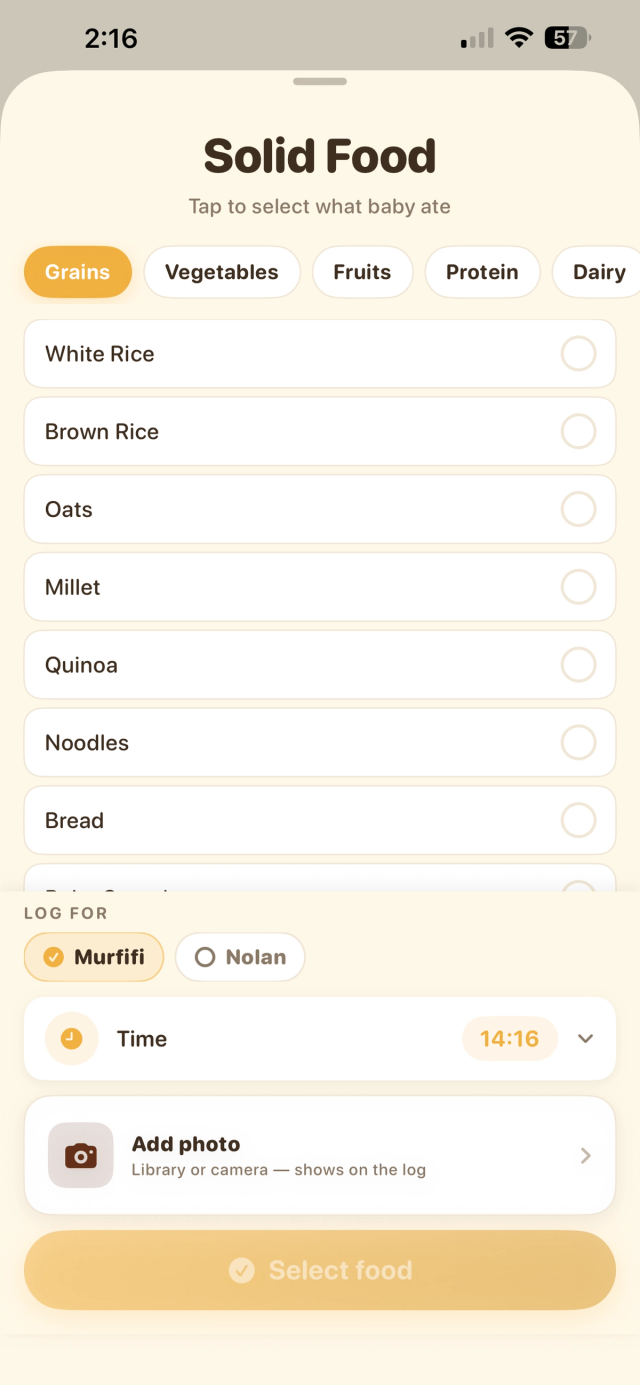
Track first foods, reactions, and favorites in MamaBee — so you always remember what your baby has tried (and loved).
Get the appPurees vs. baby-led weaning
You'll hear about two main approaches — and you can absolutely mix them:
- Purees (spoon-feeding): you start with smooth purees and gradually thicken the texture. Familiar, controlled, less messy.
- Baby-led weaning (BLW): you skip purees and offer appropriately sized soft finger foods that baby feeds themselves. More independence, more mess, great for developing motor skills.
Neither is "better" — the best approach is the one that fits your baby and your comfort level. Many families do a bit of both.
Foods and things to avoid
Keep these off the menu in the first year:
- Honey — not before 12 months (risk of infant botulism)
- Whole nuts, popcorn, whole grapes, chunks of hard food — choking hazards
- Cow's milk as a main drink — before 12 months (small amounts in food are fine)
- Added salt and sugar — babies don't need them
Allergens: introduce them early
Current advice has flipped from the old "delay allergens" thinking. Now experts recommend introducing common allergens early and regularly (around 6 months), one at a time, including:
- Peanut (as smooth peanut butter thinned with water — never whole nuts)
- Egg (well-cooked)
- Dairy, wheat, soy, fish
Early, consistent exposure may actually help *prevent* allergies. If your baby has severe eczema or a known food allergy, talk to your pediatrician about how to introduce allergens safely.
Gagging vs. choking (know the difference)
This one scares every new parent. Gagging is normal and protective — it's noisy, your baby is red-faced but making sound, and it pushes food forward. Choking is silent — no sound, no breathing, a look of distress. Learn the difference (an infant CPR/first-aid class is hugely reassuring), always supervise meals, and never prop-feed.
Keep it low-pressure and fun
Early solids are about *exploring*, not filling up — "food before one is just for fun." Your baby still gets most nutrition from milk this year. Let them touch, squish, and play with food, expect a spectacular mess, and don't stress about how much actually gets eaten. Your calm, happy energy at the table matters more than a clean bib.
Setting up for mealtime success
A few small setups make solids smoother from day one. Always feed your baby sitting upright in a high chair (never reclined or propped), buckled in and supervised. Put down a splash mat, dress them in a wipe-clean bib or just a diaper on warm days, and expect food everywhere — that mess is part of learning. Offering solids at the family table, at roughly the same time each day, turns mealtime into a social routine your baby will look forward to. And keep milk feeds going as usual around solids for the whole first year; solids are added alongside milk, not a replacement for it yet.
Frequently asked questions
Can I start solids at 4 months?
Most guidance says wait until around 6 months and not before 4 months — and only if your baby shows readiness signs. If you're considering starting between 4 and 6 months, check with your pediatrician first.
How much solid food should a 6-month-old eat?
Very little at first — a few teaspoons once a day is plenty, building up gradually. Milk remains their main source of nutrition throughout the first year, so don't worry about amounts early on.
Do I need to introduce foods one at a time?
Introducing single foods every few days makes it easier to spot any reaction, especially with allergens. Once foods are well tolerated, you can freely combine them.
The takeaway
Start solids around 6 months, but let your baby's readiness signs — sitting up, no tongue-thrust, real interest in food — lead the way. Offer iron-rich first foods, introduce allergens early and often, skip honey and choking hazards, and keep the whole thing playful and pressure-free. Track what you try so you remember the wins. It's messy, it's joyful, and it's a milestone worth savoring. For what comes next at the table, see our baby feeding guide.
Get MamaBee free and log solids, first foods, and reactions — one tap at every messy meal.
Get the app*This article is general information, not medical advice. Talk to your pediatrician about starting solids, especially with allergy concerns.*
← All MamaBee articles

